XILINX 1736DPC Prom Ic 325233 DIP8 36KB
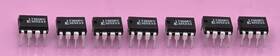
( Brand: Xilinx ), ( Manufacturer Part Number: 1736DPC )
Review XILINX Lot Of 36kb Prom Ic
The **Xilinx 1736DPC (Part Number: 325233, DIP-8 Package, 36KB PROM)** is a high-performance, programmable read-only memory (PROM) integrated circuit designed for applications requiring reliable, non-volatile data storage with fast access times. Manufactured by Xilinx, a leader in programmable logic and memory solutions, this PROM is part of the company s legacy yet highly regarded family of programmable components, offering a balance of simplicity, durability, and efficiency for embedded systems, firmware storage, and custom logic implementations. Encased in an 8-pin Dual In-line Package (DIP-8), this chip provides a compact yet robust form factor, making it ideal for breadboarding, prototyping, and integration into larger circuit boards where space is a consideration. With a total capacity of **36 kilobytes (36,864 bytes)**, the 1736DPC delivers ample storage for firmware, lookup tables, or configuration data, ensuring that critical information remains intact even during power cycles or system resets. Unlike traditional ROMs, this PROM is programmable via ultraviolet (UV) light or electrical means (depending on the variant), allowing engineers to customize its contents without altering the physical hardware an invaluable feature for iterative development and field upgrades. Its **high-speed access times** and **low-power consumption** make it suitable for applications ranging from microcontroller support to specialized signal processing tasks, where reliability and speed are paramount. The device operates within standard voltage ranges, typically **5V**, and is designed to withstand harsh environmental conditions, ensuring long-term stability in industrial, automotive, or aerospace applications. Whether used for storing bootloaders, device firmware, or custom logic patterns, the Xilinx 1736DPC stands as a versatile and dependable solution for developers seeking a blend of programmability, performance, and ease of integration in their designs.
The **Xilinx 1736DPC (325233, DIP-8, 36KB PROM)** is an older, specialized programmable read-only memory (PROM) chip designed for Xilinx FPGA configuration and debugging. Below is a detailed analysis of its pros and cons, followed by a conclusion and recommendation.
---
### **Pros of buying a Xilinx 1736DPC (325233, DIP-8, 36KB PROM)**
1. **Compatibility with Older Xilinx FPGAs**
The 1736DPC was designed for configuring and debugging early Xilinx FPGAs, particularly those using the **XC4000/XC5200 series** or other legacy devices that relied on PROM-based configuration. If you are working with vintage or restored systems that require this specific chip, it is essential for proper operation.
2. **Direct Configuration Support**
Unlike modern FPGAs that use SPI, JTAG, or USB-based configuration, the 1736DPC provides a **dedicated PROM interface**, which can be useful in systems where other configuration methods are unavailable or unreliable. It allows for non-volatile storage of FPGA bitstreams without requiring external programmers.
3. **Low-Power and Reliable**
PROM chips like this are designed to be stable and low-power, making them suitable for long-term storage of configuration data in embedded or legacy systems. They do not suffer from wear issues like flash memory in some cases.
4. **Physical DIP-8 Package**
The DIP-8 package is easy to solder and replace manually, which can be advantageous in prototyping or field repairs where surface-mount components are difficult to work with.
5. **Historical and Collectible Value**
If you are restoring or preserving vintage electronics (e.g., old Xilinx-based development boards, retro computing projects, or industrial control systems), this chip may be a necessary or desirable component for authenticity.
6. **No External Programming Required**
Unlike modern FPGAs that often require a separate programmer (e.g., Xilinx s USB-HID or JTAG cables), the 1736DPC can be programmed directly into the PROM using Xilinx s older software tools (e.g., **Foundation Series 2.1i** or **ISE WebPACK** with legacy support). This can simplify configuration in isolated systems.
7. **Potential for DIY Repairs**
If you are working on a system where the original PROM has failed, replacing it with a new 1736DPC can restore functionality without needing to reverse-engineer modern configuration methods.
---
### **Cons of buying a Xilinx 1736DPC (325233, DIP-8, 36KB PROM)**
1. **Extremely Obsolete and Hard to Source**
The 1736DPC is **long out of production**, and finding a new or replacement unit can be difficult. You may need to rely on:- Ebay or specialized electronics marketplaces (often at high prices due to scarcity).
- Salvaging from old Xilinx development boards or scrap.
- Manufacturing a clone (which may not be straightforward due to proprietary programming algorithms).
This makes it a **high-risk purchase** in terms of availability.
2. **Limited Use Case**
Modern FPGAs (e.g., Xilinx Artix-7, Spartan-6, or newer) **do not use PROM configuration**. Instead, they rely on:- SPI flash (e.g., Micron, Winbond).
- JTAG or USB-HID interfaces.
- External configuration PROMs via parallel interfaces (e.g., Xilinx s **XCF02S** or **XCF04S** for newer devices).
Thus, this chip is **only useful for very specific legacy systems**.
3. **No Official Support or Updates**
Xilinx has **discontinued support** for the 1736DPC and its associated tools. Programming it requires:- Outdated software (e.g., **Foundation Series 2.1i** or **ISE 6.3i**).
- Manual bitstream generation, which may not be compatible with modern FPGA tools.
This makes it difficult to generate or update configuration data without additional effort.
4. **Programming Complexity**
Programming the 1736DPC requires:- A **legacy Xilinx programmer** (e.g., **XCP or XCF programmer**).
- Specialized software to convert bitstreams into the correct format for the PROM.
- Manual handling of configuration data, which is error-prone compared to modern automated tools.
5. **No Guarantee of Compatibility**
Even if the chip is physically compatible with your system, the **configuration protocol** may have been modified or deprecated. If the original bitstream was generated with a different toolchain, it may not work at all.
6. **Higher Cost Relative to Alternatives**
Due to scarcity, a single 1736DPC can cost **$50 $200 ** on secondary markets, which is far more expensive than modern configuration PROMs (e.g., a **XCF02S** for $5 $10). For modern projects, this is an unnecessary expense.
7. **Risk of Counterfeit or Fake Chips**
Since this chip is no longer manufactured, there is a risk of purchasing **counterfeit or non-functional units** from untrusted sellers. Testing the chip may require specialized equipment.
8. **No Long-Term Reliability Guarantee**
PROM chips can degrade over time, especially if exposed to high temperatures or voltage spikes. Unlike modern flash memory, they have no built-in error correction or wear-leveling.
---
### **Conclusion**
The **Xilinx 1736DPC (325233, DIP-8, 36KB PROM)** is a **niche, highly specialized component** with limited practical use today. It is **only worth purchasing if**:
- You are **restoring or maintaining a specific vintage Xilinx FPGA system** that explicitly requires this chip (e.g., an early XC4000-based board from the 1990s).
- You have **no alternative configuration method** and cannot modify the system to use a modern PROM or JTAG interface.
- You are **willing to invest time and effort** into sourcing, programming, and troubleshooting an obsolete part.
For **any modern FPGA project**, this chip is **completely unnecessary** and should be replaced with a supported configuration method (e.g., SPI flash, JTAG, or a newer Xilinx configuration PROM). The cost, scarcity, and lack of official support make it a **poor choice** for new or general-purpose applications.
---
### **Recommendation**
1. **If You Need It for Legacy Systems:**- **Source the chip from a trusted seller** (e.g., eBay with positive feedback, specialized electronics distributors).
- **Verify compatibility** with your exact FPGA model and software version.
- **Keep a backup** in case the chip fails, as replacements may be difficult to find.
- **Document the programming process** in case you need to reprogram it later.
2. **If You Are Working with Modern FPGAs:**- **Avoid this chip entirely**. Use a **modern configuration PROM** (e.g., **XCF02S, XCF04S, or SPI flash**) instead.
- **Use Xilinx s current tools** (Vivado, ISE, or SDK) to generate bitstreams and configure the FPGA via JTAG, USB, or SPI.
- **Consider a development board** with built-in configuration support to simplify development.
3. **If You Are Unsure:**- **Check if your system can be modified** to use a supported configuration method (e.g., adding a JTAG header or using a modern PROM).
- **Consult Xilinx s legacy documentation** (if available) to confirm whether the 1736DPC is still viable for your use case.
- **Explore alternatives** such as **salvaging a working PROM from a donor board** rather than buying a new one.
In summary, the **1736DPC is a relic of the past** and should only be considered for **very specific, non-critical legacy applications**. For all other cases, modern alternatives are far more practical and cost-effective.
Details:
For more details, please refer the photos included with listing. Lot of 7 Xilinx 1736DPC 325233 DIP8 36Kb PROM IC, New, old stock, Lot IC.
part #: 1736dpc prices
- $24.99-$49.98
specifications electricalmiscoz:
- brand: Xilinx
- mpn: 1736dpc
returns electricalmiscoz:
- policy: Returns Accepted
- paid by: Seller
- time: 30 Days
- method: Money back
payments electricalmiscoz:
- wallet: Apple-pay
- other
- credit card: Mastercard
general electricalmiscoz:
- Electrical Supplies > Electrical Wire Cable Accessories > Electrical Wire Cable Connectors
- condition: Open box
seller electricalmiscoz:
- # reviews: 1702
- city: Glendale, Arizona
- rating: 100.0%
offer electricalmiscoz:
- availability: In Stock
- sold: 0
- options: Ship-to-home
- started: February 21, 2026
- quantity: 1
shipping electricalmiscoz:
- transit: 4-10 Days
- cost: $0.00
- type: Calculated
- service: USPS Ground Advantage
- class: Standard
- carrier: USPS
Xilinx 1736DPC Is Similar To:
- Xilinx 17128c Lot Of 11 9446 Dip8 128kb Prom Ic (73.7% similar) Lot of 11 Xilinx 17128C 9446 DIP8 128KB prom ic, new, old stock, lot ic. For more details, please refer the photos included with listing...(February 21st, 2026)