IFM ID0013 Programmable Flush Mountable Inductive Proximity 1F0013 Sensors Switches
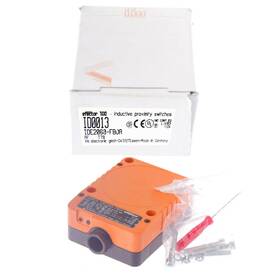
( Brand: Ifm ), ( Manufacturer Part Number: ID0013 ), ( Part Type: Sensor ), ( Item Condition: Brand New ), ( Material: Plastic )
Review IFM Programmable Non flush Mountable Inductive Proximity Sensors Switches
The **IFM ID0013 1F0013 series** represents a cutting-edge lineup of **programmable, non-flush-mountable inductive proximity sensors**, engineered to deliver unparalleled precision, flexibility, and reliability in demanding industrial and automation applications. These sensors are designed with a robust **M12 connector interface**, ensuring secure and easy integration into existing systems while maintaining a clean, flush-free installation that minimizes clutter and simplifies maintenance. The **programmable functionality** allows users to customize key parameters such as switching thresholds, hysteresis, output type (PNP/NPN), and even response times, making them adaptable to a wide range of materials from metal to non-metallic conductive surfaces while accommodating varying environmental conditions. With an **IP67 rating**, these sensors excel in harsh environments, offering protection against dust, water, and contaminants, ensuring consistent performance even in high-vibration or corrosive settings. The **compact yet durable design** features a **stainless steel housing** that resists wear and corrosion, while the **wide detection range (up to 100 mm)** provides versatility for applications requiring precise object detection at varying distances. Additionally, the **LED status indicator** offers real-time feedback on sensor status, simplifying troubleshooting and operational monitoring. Whether deployed in assembly lines, material handling systems, or automated packaging applications, the **IFM ID0013 1F0013 series** combines advanced programmability, rugged construction, and seamless integration to enhance efficiency, reduce downtime, and improve overall system performance.
### **Pros and Cons of Buying IFM ID0013-1F0013 Programmable Non-Flush Mountable Inductive Proximity Sensors**
#### **Pros:**1. **Programmability and Flexibility** These sensors offer configurable parameters such as output type (NPNO/NO), response time, hysteresis, and filtering, allowing them to adapt to various application requirements without hardware changes.
2. **Non-Flush Mounting Capability** The non-flush mountable design provides flexibility in installation, making it easier to integrate into existing systems where flush mounting is impractical.
3. **High Reliability and Durability** IFM sensors are known for robust construction, suitable for industrial environments with exposure to dust, moisture, and temperature variations (IP67/IP69K-rated models).
4. **Wide Detection Range** The ID0013 series supports adjustable detection ranges (e.g., 10mm to 100mm), accommodating different target sizes and material properties.
5. **Digital Communication Options** Some variants support PROFIBUS, PROFINET, or IO-Link, enabling seamless integration into modern automation systems for remote monitoring and diagnostics.
6. **Low Power Consumption** Efficient design reduces energy usage, making them cost-effective for long-term operation.
7. **Easy Installation and Maintenance** Quick-connect terminals and modular design simplify wiring and troubleshooting.
8. **Compatibility with IFM s Ecosystem** Works well with other IFM devices and software tools like IFM s **IFM Connect** platform for centralized sensor management.
---
#### **Cons:**1. **Higher Upfront Cost** Programmable sensors are generally more expensive than basic fixed-function models, which may be a drawback for budget-sensitive applications.
2. **Complexity for Non-Experienced Users** The programming interface (e.g., IFM s **IFM Configurator** software) may require training, potentially increasing setup time for less technical staff.
3. **Limited Physical Customization** Unlike flush-mounted sensors, non-flush models may not fit tightly in confined spaces, requiring additional mounting solutions.
4. **Potential for Overkill in Simple Applications** If the application only requires basic detection without advanced features (e.g., no need for hysteresis or digital communication), a simpler sensor might suffice.
5. **Dependency on IFM s Software** Some advanced features rely on proprietary tools, which could pose challenges if compatibility issues arise with future system upgrades.
6. **Sensitivity to Target Material** Inductive sensors work best with metal targets; non-metallic or poorly conductive materials may require adjustments or alternative sensor types.
7. **Warranty and Support Considerations** While IFM has strong support, third-party repairs or replacements might be slower or more costly than with generic sensors.
---
### **Conclusion and Recommendation**
The **IFM ID00013-1F0013** programmable non-flush mountable inductive proximity sensors are an excellent choice for applications requiring **flexibility, reliability, and integration with modern automation systems**. Their programmability and robust design make them ideal for industrial environments where dynamic adjustments or complex setups are necessary. However, the **higher cost and learning curve** associated with programming may not justify their use in straightforward or cost-sensitive applications.
**Recommendation:** - **Buy if:**- You need adjustable detection parameters (e.g., response time, hysteresis).
- Your system requires digital communication (PROFIBUS, PROFINET, IO-Link).
- You operate in harsh environments where durability and IP ratings are critical.
- Future-proofing for potential system upgrades is a priority.
- **Avoid if:**- Your application is simple and doesn t require programmability.
- Budget constraints make basic, non-programmable sensors a more viable option.
- Installation space is extremely limited, and flush mounting is non-negotiable.
For most **mid-to-large-scale industrial automation projects** where adaptability and long-term performance matter, these sensors are a **strong recommendation**. For smaller or cost-constrained setups, evaluate whether the added features are essential before purchasing.
Details:
part #: id0013 prices
- $51.99-$225.00
specifications electricalmiscoz:
- brand: Ifm
- mpn: Id0013
- part type: Sensor
- item condition: Brand New
- material: Plastic
payments electricalmiscoz:
- other
- wallet: Apple-pay
- credit card: Diners-club
general electricalmiscoz:
- Electrical Supplies > Electrical Wire Cable Accessories > Electrical Wire Cable Connectors
- condition: New
seller electricalmiscoz:
- rating: 99.0%
- # reviews: 161
- city: Hebron, Kentucky
returns electricalmiscoz:
- method: Money back
- paid by: Buyer
- time: 14 Days
- policy: Returns Accepted
shipping electricalmiscoz:
- transit: 6-10 Days
- cost: $0.00
- service: USPS Ground Advantage
- type: Fixed
- class: Standard
- carrier: USPS
offer electricalmiscoz:
- started: March 16, 2026
- options: Ship-to-home
- sold: 0
- availability: In Stock
- best offers: True
- quantity: 2