KIMBLUTH Boat-wire Gauge Duplex Marine Tinned Copper Cable 711181841237 Boat Standard Wire 100FT Awg
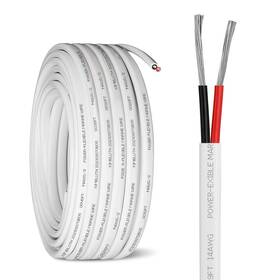
( Brand: Kimbluth ), ( Manufacturer Part Number: BOAT-WIRE ), ( Part Type: Boat Gauge Cable ), ( Number Of Cable Strands: Multi Strand ), ( Color: 14 Awg ), ( Material: Tinned Copper, Pvc ), ( Item Weight: 5.52 Pounds ), ( Gauge: 14.0 ), ( Voltage: 600 Volts ), ( Package Dimensions: 11.97 X 8.94 X 6.42 Inches ), ( Size: 100ft ), ( UPC: 711181841237 )
Review KIMBLUTH Gauge Duplex Marine Wire Tinned Copper Cable 100ft Awg Standard Usa
The **Kimball Electronics 711181841237 14 Gauge Duplex Marine Wire, Tinned Copper Boat Cable (100 ft, AWG Standard)** is a premium-quality electrical cable engineered specifically for demanding marine and boating applications where reliability, durability, and corrosion resistance are paramount. Constructed from **tinned copper conductors**, this wire ensures superior conductivity while protecting against oxidation and galvanic corrosion common challenges in saltwater environments. The **14-gauge AWG (American Wire Gauge) standard** provides a balanced thickness, offering sufficient current-carrying capacity for most marine electrical systems, including lighting, bilge pumps, navigation equipment, and auxiliary circuits, without excessive weight or bulk. The **duplex configuration** features two insulated conductors within a single jacket, making it ideal for wiring pairs such as switches, relays, or sensor circuits where two separate but related circuits must be run together efficiently. The **marine-grade PVC insulation** is designed to withstand harsh conditions, including exposure to UV rays, moisture, and temperature fluctuations, ensuring long-term performance even in the most demanding marine environments. Whether used in recreational boats, fishing vessels, or commercial marine applications, this wire delivers the robustness and performance required to keep critical systems running smoothly. Its **100-foot length** offers ample coverage for most wiring projects, reducing the need for excessive splicing and minimizing potential weak points in the electrical system. Built to meet strict industry standards, this cable is a trusted choice for marine electricians and DIY enthusiasts alike, providing peace of mind with every installation.
**Pros and Cons of buying a Kimble Wire 711181841237 (14 Gauge Duplex Marine Wire, Tinned Copper, 100 ft, AWG Standard)**
### **Pros:**1. **High-Quality Material** The wire is made of **tinned copper**, which is corrosion-resistant and ideal for marine environments where saltwater and humidity can degrade standard copper. Tinning also improves solderability, reducing the risk of poor connections.
2. **Marine-Grade Construction** Designed specifically for **boating applications**, meaning it is built to withstand vibration, moisture, and temperature fluctuations better than general-purpose wire.
3. **Duplex Design** The **duplex configuration** (two conductors in one jacket) simplifies wiring by reducing the number of cables needed for dual-circuit applications (e.g., power and signal). This can save space and installation time.
4. **AWG 14 Gauge** This gauge is a **versatile choice** for medium-duty marine electrical systems, suitable for **12V DC circuits** (e.g., lighting, switches, small appliances) without excessive current draw. It strikes a balance between thickness (reducing voltage drop) and flexibility (easier to run through tight spaces).
5. **100-Foot Length** A **long length** reduces the need for multiple splices or connectors, minimizing potential failure points. This is particularly useful for larger boats or when wiring is spread out.
6. **Standard AWG Compliance** Meets **industry standards** for wire gauging, ensuring compatibility with marine-grade connectors, fuses, and circuit breakers.
7. **Durable Jacket** The outer insulation is likely **UV-resistant and abrasion-proof**, which is crucial for exposed wiring on boats where physical stress and sunlight degradation are concerns.
8. **Reliability in Wet Conditions** Tinned copper and proper marine-grade insulation help prevent **corrosion and short circuits**, which are common issues in marine electrical systems.
9. **Easy to Install** The **flexible yet sturdy construction** makes it easier to route through hulls, compartments, and under decks compared to thicker, rigid wires.
10. **Widely Available** As a **standard marine wire**, it is easy to find replacements or additional lengths if needed, reducing supply chain risks.
---
### **Cons:**1. **Not for High-Current Applications** **14 AWG is limited to about 10 15 amps** in marine environments (due to derating for heat and vibration). For **high-power devices** (e.g., winches, large motors, or multiple 12V systems running simultaneously), a **thicker gauge (e.g., 12 or 10 AWG)** would be required to avoid excessive voltage drop or overheating.
2. **Potential for Voltage Drop in Long Runs** While 100 ft is manageable for low-current circuits, **long, high-current runs** (e.g., from a battery to a distant motor) may still experience noticeable voltage drop unless properly sized with a thicker wire or a voltage regulator.
3. **Cost Compared to General Wire** Marine-grade wire is **more expensive** than standard household or automotive wire due to its corrosion-resistant properties. If you re on a tight budget and the application isn t marine-specific, a **tinned copper general-purpose wire** might suffice.
4. **Limited Flexibility for Extreme Bending** While flexible enough for most marine applications, **repeated extreme bending** (e.g., in tight, constantly moving areas) could eventually fatigue the insulation or conductors over time.
5. **Requires Proper Installation** Like all marine wiring, **poor installation** (e.g., sharp bends, improper crimping, or exposed connections) can lead to failures. This wire is only as good as how it s installed.
6. **Not Ideal for AC Circuits** If you re wiring **110V AC systems** (e.g., for shore power), this is a **DC-only wire**. You d need a different gauge and insulation rating for AC applications.
7. **Storage and Handling Considerations** The **100-foot length** can be bulky and difficult to store or transport without proper coiling or protection. It may require cutting to length, which adds to labor costs.
8. **Potential for Counterfeit or Low-Quality Alternatives** If purchasing from untrusted sources, there s a risk of receiving **substandard wire** that doesn t meet Kimble s specifications. Always buy from reputable marine suppliers.
---
### **Ending Conclusion:**The **Kimble Wire 711181841237 (14 AWG duplex, tinned copper, 100 ft)** is an **excellent choice** for **medium-duty marine electrical applications** where **corrosion resistance, flexibility, and reliability** are priorities. It is well-suited for **12V DC circuits** such as lighting, switches, bilge pumps, and small appliances on boats. The **tinned copper and marine-grade insulation** ensure longevity in harsh conditions, while the **duplex design** simplifies wiring for dual-circuit needs.
However, it is **not ideal** for **high-current or high-power applications**, where a thicker gauge (e.g., 10 or 12 AWG) would be necessary to prevent voltage drop and overheating. Additionally, while the length is convenient, improper installation or overloading can negate its benefits.
### **Recommendation:** - **Buy this wire if:**- You need **reliable, corrosion-resistant 14 AWG wire** for **12V DC marine circuits** (e.g., lighting, switches, small motors).
- You want a **duplex configuration** to simplify wiring in confined spaces.
- Your application involves **moderate current draw** (under 15 amps) and **long runs** where standard wire would fail.
- **Consider alternatives if:**- You require **high-current wiring** (e.g., for winches, large motors, or multiple high-draw devices). In this case, **10 or 12 AWG marine wire** would be safer.
- You re working with **AC circuits** (shore power, inverters), which require **different insulation and gauge ratings**.
- You need **extreme flexibility** (e.g., for dynamic applications like trolling motors), where **thinner, more flexible wire** (e.g., 16 AWG) might be better.
- Budget is a concern, and you can use **tinned copper general-purpose wire** for non-marine applications.
**Final Verdict:** For **most standard marine 12V DC wiring needs**, this wire is a **strong, dependable purchase**. Just ensure proper installation, avoid overloading, and use it within its intended specifications.
Details:
So it is very suitable for outdoor, communication and ships. Standard UL 1426 Boat wire, meet SAE ABYC specifications cable that can used for marine environments. Operating voltage rate up to 600V, working temperature 150 deg dry, 75 wet. Widely used wires: In addition to anti-corrosion, our wires are also flexible prevent hardening of the jacket due UV, so it can be in extreme marine environments.
Special customer PVC insulation's that can effectively prevent wire oxidation, salt waterproof corrosion, high temperature resistance, gasoline, battery acid and abrasion. Tinned copper is mainly used to prevent OFC from oxidizing, effectively improving conductivity and extending the service life of wire. PVC Jacket insulator. 14 Gauge Duplex Marine Wire Tinned Copper Boat Cable, 100Ft AWG Standard USA:: Item model number BOAT-WIRE, Number of Cable Strands Multi Strand, No wires 2, Color AWG, Brand Kimbluth, Material Copper, PVC, Weight 5.52 pounds, 14.0, voltage 600 volts , Manufacturer Package Dimensions 11.97 x 8.94 6.42 inches, Size 100ft.
Wires with more than 98% copper content, standard OFC marine wires. Electrical copper cable that used in lighting systems, Boat applications, automotive household circuit systems and other daily environments, can also be extreme environments such as rivers, lakes, solar applications marine. Tinned copper: Kimbluth uses the highest technology tinned copper to produce wires.
specifications electricalmiscoz:
- brand: Kimbluth
- mpn: Boat-wire
- part type: Boat Gauge Cable
- number of cable strands: Multi Strand
- color: 14 Awg
- material: Tinned Copper, Pvc
- item weight: 5.52 Pounds
- gauge: 14.0
- voltage: 600 Volts
- package dimensions: 11.97 X 8.94 X 6.42 Inches
- size: 100ft
- upc: 711181841237
shipping electricalmiscoz:
- class: Expedited
- type: Fixed
- service: Expedited
- cost: $0.00
- transit: 3-6 Days
general electricalmiscoz:
- condition: New
- Electrical Supplies > Electrical Wire Cable Accessories > Electrical Wire Cable Connectors
seller electricalmiscoz:
- # reviews: 50
- rating: 100.0%
- city: Denver, Colorado
returns electricalmiscoz:
- policy: Returns Accepted
- time: 30 Days
- paid by: Seller
- method: Money back
payments electricalmiscoz:
- wallet: Apple-pay
- credit card: Mastercard
- other
offer electricalmiscoz:
- sold: 0
- started: March 14, 2026
- quantity: 1
- options: Ship-to-home
- availability: In Stock
Kimbluth BOAT Is Similar To:
- Kimbluth 651358072265 6 Gauge Duplex Marine Wire Tinned Copper Boat Cable 40ft Awg Standard Usa (87.5% similar) ...(October 30th, 2023)
- Kimbluth 445056488427 12 Gauge Duplex Marine Wire Tinned Copper Boat Cable 30ft Awg Stand (86% similar) Kimbluth 12 gauge duplex marine wire tinned copper boat cable, 30FT awg standard usa PFC oxygen free for automotive speakers solar out doors...(November 1st, 2023)
- Kimbluth 609755091273 12 Gauge Duplex Marine Wire Tinned Copper Boat Cable 30ft Awg St (83.1% similar) ...(November 9th, 2023)
- Kimbluth 647349469510 8 Gauge Duplex Marine Wire Tinned Copper Boat Cable 6ft Awg Standard Usa O (85% similar) Material: copper. Special customer pvc insulation's that can effectively prevent wire oxidation, salt waterproof corrosion, high temperature resistance, gasoline, battery acid and abrasion. Country of origin: china. Electrical copper cable that used in lighting systems, boat applications, automotive...(January 1st, 2025)
- Kimbluth 658359673866 8 Gauge Triplex Marine Wire Tinned Copper Boat Cable 30ft Awg Standard Usa (85% similar) Manufacturer: Kimbluth. Electrical copper cable that used in lighting systems, boat applications, automotive household circuit systems and other daily environments, can also be extreme environments such as rivers, lakes, solar applications marine. Number of cable strands: multi strand. Package ...(January 1st, 2025)
- Kimbluth 658358816547 6 Gauge Marine Wire Tinned Copper Boat Cable Standard Usa Ofc Oxygen Free Co (71.8% similar) Operating voltage rate up to 600V, working temperature 150 deg dry, 75 wet. Special customer pvc insulation's that can effectively prevent wire oxidation, salt waterproof corrosion, high temperature resistance, gasoline, battery acid and abrasion. Standard 6 gauge wire that used in lighting ...(January 2nd, 2025)
- Kimbluth 605556633643 8 Gauge Duplex Marine Wire Tinned Copper Boat Cable 20ft Awg Standard Usa (85.4% similar) ...(January 2nd, 2025)
- Kimbluth 313044228218 14 Gauge Triplex Marine Wire Tinned Copper Boat Cable 20ft Awg Standard Usa (86.6% similar) Operating voltage rate up to 600V, working temperature 150 deg dry, 75 wet. Standard ul 1426 boat wire, meet sae ABC specifications cable that can used for marine environments. Pvc jacket insulator. Electrical copper cable that used in lighting systems, boat applications, automotive household ...(January 2nd, 2025)
- Kimbluth 639394776859 4 Gauge Marine Wire Tinned Copper Boat Cable Standard Usa Ofc Oxygen Free Co (70.8% similar) Standard ul 1426 boat wire, meet sae ABC specifications cable that can used for marine environments. Operating voltage rate up to 600V, working temperature 150 deg dry, 75 wet. Special customer pvc insulation's that can effectively prevent wire oxidation, salt waterproof corrosion, high ...(January 8th, 2025)
- Kimbluth 651358072272 10 Gauge Duplex Marine Wire Tinned Copper Boat Cable 200ft Awg S (82% similar) ...(January 9th, 2025)
- Kimbluth 658359673835 4 Gauge Duplex Marine Wire Tinned Copper Boat Cable 40ft Awg Stan (83.7% similar) ...(January 9th, 2025)