DEKA 05499 Awg Solder Pellets Slugs Pellets/slugs
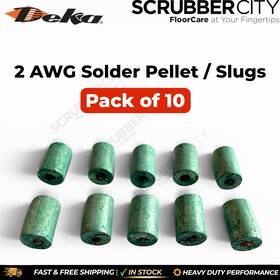
( Brand: Deka ), ( Manufacturer Part Number: 05499 ), ( Non-domestic Product: No ), ( Type: Plug ), ( Connector Style: Solder ), ( Color: Green ), ( Unit Quantity: 10 ), ( Country Of Origin: United States )
Review DEKA Awg Solder Pellet's/slugs Color Code Green Per Package
The **Deka 05499 AWG Solder Pellets/Slugs (10 oz)** is a high-performance, lead-free soldering solution designed for precision electronics assembly, rework, and repair applications where traditional solder wire may fall short. Engineered for reliability and consistency, these spherical solder pellets measuring approximately 0.035 inches in diameter offer a unique alternative to traditional solder wire, particularly in automated or high-volume production environments where wire feeders may struggle with clogging or uneven deposition. Each pellet is formulated from a **lead-free, rosin-based flux core** encased in a pure tin-silver-copper (SnAgCu) alloy, ensuring excellent wetting properties and strong mechanical bonds while adhering to environmental and safety regulations. The **10-ounce capacity** provides ample material for both prototyping and small-scale production runs, making it ideal for hobbyists, engineers, and technicians who require a clean, residue-free soldering experience without the mess or tangling associated with solder wire. These pellets are particularly well-suited for **wave soldering, selective soldering, or manual soldering techniques** where precise control over solder volume is critical, such as in surface-mount technology (SMT) or through-hole assemblies. Their uniform size and smooth texture minimize oxidation and ensure uniform melting, reducing the risk of cold solder joints or bridging. Whether used in a soldering iron, hot air rework station, or automated dispensing system, the Deka 05499 pellets deliver consistent, high-quality results with minimal post-soldering cleanup, making them a trusted choice for professionals demanding both efficiency and precision in their soldering applications.
**Pros and Cons of Buying Deka 05499 AWG Solder Pellets/Slugs (10)**
### **Pros:**1. **Precision and Consistency** Solder pellets or slugs offer a more controlled and repeatable amount of solder compared to traditional wire or paste. This is particularly useful for automated or high-precision soldering applications, such as reflow soldering or wave soldering, where exact quantities are critical.
2. **Convenience for Small-Scale Work** For hobbyists or small-scale electronics repairs, pellets eliminate the need for messy solder paste or the hassle of cutting wire. They can be easily placed directly onto pads or joints, reducing waste and improving efficiency.
3. **Reduced Oxidation** Since pellets are pre-formed and often stored in inert packaging, they are less exposed to air compared to solder wire, which can reduce oxidation and improve solderability.
4. **Versatility in Applications** These pellets are suitable for a variety of soldering techniques, including hand soldering, reflow soldering, and even some automated processes. They work well with leaded (e.g., 60/40 tin-lead) and lead-free (e.g., SAC305) alloys, depending on the specific product.
5. **Cost-Effective for Bulk Use** While the upfront cost per unit may seem higher than solder wire, pellets can be more economical for large-scale or frequent use due to their precision and reduced waste.
6. **Easier Storage and Shelf Life** Pellets are less prone to drying out or degrading over time compared to solder paste, which can harden or lose effectiveness. They also take up less space than bulk solder wire.
7. **Cleaner Work Environment** Unlike solder paste, which can be sticky and messy, pellets produce minimal residue, making cleanup easier and reducing the risk of contamination in sensitive electronics.
---
### **Cons:**1. **Limited to Specific Applications** Pellets are not as versatile as solder wire for general-purpose soldering, such as through-hole or surface-mount repairs where wire is more flexible. They are best suited for controlled environments like reflow ovens or precise hand placement.
2. **Higher Initial Cost** Compared to solder wire or even solder paste, pellets can be more expensive per unit, especially for small quantities. This may not be cost-effective for occasional or casual users.
3. **Requires Precision Tools** Using pellets effectively often necessitates specialized tools, such as a soldering iron with a fine tip, tweezers, or a reflow station. This adds complexity for beginners or those without the right equipment.
4. **Potential for Overuse or Underuse** Since pellets are pre-measured, it s easy to accidentally use too much or too little solder, leading to cold joints or excess solder bridges. This requires careful handling and practice.
5. **Not Ideal for Large-Scale Wire Soldering** If you frequently work with long wires or complex soldering tasks (e.g., repairing PCBs with many connections), pellets may not be as practical as traditional solder wire.
6. **Limited Availability** Depending on your location, finding specific pellet sizes or alloys (e.g., lead-free options) may be harder than sourcing solder wire or paste, which are more widely stocked.
7. **Learning Curve** For beginners, mastering the use of pellets especially in reflow soldering can be challenging. Proper temperature control, timing, and placement are critical to success.
---
### **Conclusion:**Deka 05499 AWG solder pellets (or slugs) are a specialized tool best suited for users who prioritize precision, efficiency, and controlled soldering applications. They excel in scenarios where exact solder quantities are necessary, such as reflow soldering, automated processes, or small-scale repairs where wire would be impractical. However, they are not a one-size-fits-all solution and may not be the most cost-effective or convenient choice for general soldering tasks.
For hobbyists or professionals working on complex electronics, pellets can be a valuable addition to their toolkit, provided they are willing to invest in the right tools and techniques. For casual users or those working with simple repairs, traditional solder wire or paste may still be more practical and affordable.
---
### **Recommendation:** - **Buy the Deka 05499 pellets if:**- You work with reflow soldering, wave soldering, or other automated processes.
- You need precise, controlled soldering for surface-mount devices (SMD) or fine-pitch components.
- You frequently encounter situations where solder paste or wire would be messy or inefficient.
- You are willing to invest in the learning curve and additional tools required for optimal use.
- **Avoid or consider alternatives if:**- You are a beginner or occasional solderer who primarily works with through-hole components or simple repairs.
- You prefer the flexibility and lower cost of solder wire or paste.
- You do not have access to the right tools (e.g., a reflow oven, fine-tip iron, or tweezers) to use pellets effectively.
- You are working on a budget where the higher upfront cost of pellets is not justified by their use case.
Ultimately, pellets are a niche but powerful tool for the right applications. Evaluate your specific needs before purchasing to ensure they align with your soldering goals.
Details:
Deka 05499 2 AWG Solder Pellet's / Slugs Green 10 Pack. Each pellet is pre-measured for the correct wire size and color coded pink quick identification. Brand: Deka / East Penn. Pre-measured solder makes it easier to attach battery lugs and terminals without guessing the amount.
Also called solder slugs or pellet's. Used for battery cable lug and terminal installation. Note:For best results, use proper heat, clean terminals/cable ends, and follow safe soldering practices. Color Code:Green.
Common Use:Battery cables, battery terminals, cable lugs, automotive, marine, industrial, and equipment wiring. Deka 05499 pink solder pellet's/slugs for 2 AWG battery cable connections. Features: Part Number: 05499. Helps create a strong, conductive connection.
These solder pellet's are designed for attaching battery cable lugs and terminals to 2 AWG.
part #: 05499 prices
- $14.99-$30.05
specifications electricalmiscoz:
- brand: Deka
- mpn: 05499
- non-domestic product: No
- type: Plug
- connector style: Solder
- color: Green
- unit quantity: 10
- country of origin: United States
general electricalmiscoz:
- Electrical Supplies > Electrical Wire Cable Accessories > Electrical Wire Cable Connectors
- condition: New
returns electricalmiscoz:
- time: 30 Days
- policy: Returns Accepted
- paid by: Buyer
- method: Money back
offer electricalmiscoz:
- quantity: 7
- availability: In Stock
- options: Ship-to-home
- sold: 0
- started: May 18, 2026
seller electricalmiscoz:
- rating: 100.0%
- city: Lake Zurich, Illinois
- # reviews: 7064
shipping electricalmiscoz:
- type: Fixed
- service: USPS First Class
- cost: $0.00
- transit: 2-5 Days
- carrier: USPS
- class: Standard
payments electricalmiscoz:
- wallet: Apple-pay
- credit card: Mastercard
- other
Deka 05499 Is Similar To:
- Deka 05500 1 Awg Solder Pellets slugs Color Code Pink 10 Per Package (89.1% similar) Pre-measured solder makes it easier to attach battery lugs and terminals without guessing the amount. Deka 05500 pink solder pellet's/slugs for 1 awg battery cable connections. Used for battery cable lug and terminal installation. Common use:battery cables, battery terminals, cable lugs, automotive...(May 18th, 2026)